
INNOVATE ELT 2026
Saturday 30th May from 9:30 – 20:30
Get involved, get connected, get inspired!
Oxford TEFL, Barcelona, Spain
The only ELT event you need to attend this year
Find out why
What is the theme this year?
The theme this year is “Analogue Minds, Digital Times“.
How can teachers create measurable learning impact in a world saturated with technology?
The conference focuses on the human side of progress, such as presence, connection and empathy, that turn lessons into learning. In our usual combination of workshops, talks, panel discussions, demo-lessons and networking in the garden, we’ll look at how to ignore tech or use it purposefully while keeping people at the heart of the classroom.
Who is the InnovateELT conference for?
The InnovateELT conference is for you if you are passionate about the ELT industry and you are keen to be more involved in discussions about how to make a difference. The theme this year is “Analogue Minds, Digital Times“ and we are expecting professionals from all areas of ELT to join us in learning more about the future of the ELT classroom. Delegates can include (but are not limited to):
-
- Language school managers
- English as a foreign language teachers
- Teacher trainers
- EdTech professionals
- Materials writers
- Authors
What type of sessions will I be able to attend?
We aim to provide engaging sessions in a variety of formats. As an attendee of the InnovateELT conference, you will be able to attend four different types of sessions:
- Dynamic workshops (45 minutes)
- Demo lessons with real students (45 minutes)
- Panel discussions (45 minutes)
- Informative talks (30 minutes)
- Mini plenaries (10 minutes)
The conference will have three pathways: teaching, teacher training and management/ teacherpreneurship. Delegates will be able to focus on one area or dip into a mixture of sessions. This will be a great opportunity to delve into many toolkits, whatever context you are working in.
What else can I expect at the InnovateELT conference in 2026?
The InnovateELT conference is different to many other ELT conferences around the world. As well as providing inspiring sessions related to the world of English language teaching and learning, we also pay special attention to the people who have taken the time to join us (yes, you!).
As a attendee, you will be made to feel welcome and you will find connecting with other delegates is easy and hugely enjoyable. We encourage collaboration and we listen to our delegates as well and share our own thoughts.
You will be provided with plenty of opportunities to enjoy our sunny garden, as well as our spacious and modern classrooms. Snacks, coffee and tea will be available throughout the event to provide you with the well-needed fuel to keep you going.
By the end of the conference you will feel like you have gathered plenty of ideas, activities and inspiration to take straight back into your own workplace.
Join us, and find out for yourself!
Can I be a speaker at this event?
You can apply to do just a plenary, or a plenary and one other session.
We are looking for proposals which reflect the theme this year (“Analogue Minds, Digital Times”). This could be, for example, a new ELT product which is being developed, a teaching or training technique which has proven to work wonders, or innovative practices in leadership and management. There are four different formats available:
- Dynamic workshops (45 minutes). We encourage the use of materials and group/pair work in these sessions.
- Demo lessons (45 minutes total). We will provide about 8 intermediate students for you to teach. Delegates will observe you teach the students for about 20 minutes, after which you facilitate a discussion of the lesson with delegates and students in groups and together as a whole group.
- Informative talks (30 minutes). The session will be a presentation with some opportunity for audience Q and A.
- Mini plenaries (15 minutes). Your chance to speak your mind to all conference attendees! We will provide a microphone but you will have no visual aids.
Can I sponsor the InnovateELT conference?
If you have an ELT product or service that you would like to share, why not consider sponsoring the event? As a sponsor of the InnovateELT conference you will:
- Improve brand awareness for your business
- Interact directly with superusers and decision-makers
- Showcase your product or idea to people from across the ELT industry
- Get grassroots feedback from potential customers
- Make contacts with other professionals who can help take your business to the next level
We are offering one package per business which will include:
1 x table in the coffee area to engage with delegates and display your brand and products
1 x coffee break in your name where you can address delegates for up to 5 minutes
1 x post in our social media feed in the run up to the conference
2 x tickets to attend the conference
PLUS your name and logo on our website.
Sponsorship fee: €500
Get in touch at innovateelt@oxfordtefl.com so that we can provide you with more information and find out more about your needs.
Can you help me get a visa to attend the conference?
We provide a visa service in-house (€60 if you need a letter for your visa application). If you require a visa for attending the conference, please contact us at innovateelt@oxfordtefl.com so that we find out more about your needs.
Innovate ELT Conference
30th May 2026 | Barcelona, Spain

Speakers
Our speakers are the movers and shakers of the ELT world. Our typical conference speaker is someone truly passionate about the English Language teaching industry and full of ideas that they want to share with the community.
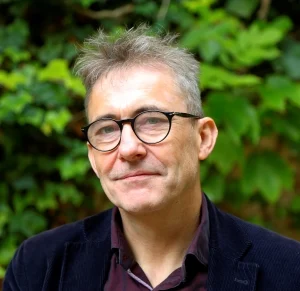
Duncan Foord
Director of Teacher Training

Barnaby Griffiths
Teacher trainer

Teresa Bestwick
Teacher, trainer and ELT author

Chris Fry
Retired EFL teacher

Joanna Ryan
Young Learners Coordinator, teacher trainer

Ramy Abdelreheem
Teacher trainer

Colin Young
Language & Communication Trainer

Nicola Meldrum
Tutor Development Specialist

Geraldine Peters
Academic and Language Instructor

Maria Sologub
English teacher, teacher trainer

Liudmila Kurzina
A freelance teacher and mentor

Elena Kolesnikova
Co-founder of Prismio games

Itamar Ortega
Spanish teacher and teacher trainer

Alice Copello
English Language Teacher

Maria Tinel
English Language Teacher

Giorgia de Musso
Director of Studies

Alla Tantsura
Learning Experience Designer

Usman Akhtar
CELTA Trainer

Nikol Mircheva
Language Teacher

Adam Isenberg
Founder of Lingadoo

Victoria Filippova
English Teacher

Aleksandra Ugolnikova
English teacher

Hebatallah Morsy
Teacher trainer

Aleksandra Bozovic
Associate Professor and EFL teacher

Alevtina Popova
School CEO

Aidan O’Toole
Teacher Trainer, Director

Elena Filimonova
Associate professor, academic director

Aikaterini Tsilimpari
Efl school owner English teacher
About Duncan
Duncan Foord
Director of Teacher Training
Qualifications: MEd in TESOL, Trinity Licentiate Diploma in TESOL (DipTESOL).
Duncan Foord is a Coach and Mentor for ELT. He is the Director of OxfordTEFL, Barcelona. He has 35 years’ experience in language teaching, teacher training and school leadership and management. He is the author of “From English Teacher to Learner Coach” (with Dan Barber, The Round 2014) The Developing Teacher (Delta Publishing, 2009) and The Language Teachers Survival Handbook with Lindsay Clandfield (Its Magazines, 2008). He is lead trainer on the OxfordTEFL Leadership in ELT course.
About Teresa
Teresa Bestwick
Teacher trainer and materials writer
Teresa is a teacher and trainer based in southern Spain. She is a tutor on Trinity Cert and DipTESOL courses and co-author of Teaching Teenagers from DELTA Publishing. She’s currently teaching a variety of one-to-one and group classes online and loves the chance to talk TEFL to folks at in-person events!
She runs an online community for ELT professionals, the TEFL Development Hub, and when not in front of her computer, is often on the search for plants.
Colin Young
Colin Young is a language and communication trainer based in Barcelona, having worked across Latin America, Asia, and Europe. From mentoring public school teachers in Malaysia to running TESOL training programs in Bolivia, and now delivering business communication workshops for Bosch, his work spans ages 5 to 65 and levels from beginner to advanced.
With experience across cultures and contexts, Colin focuses on designing interactive, human-centred learning that strengthens dialogue, participation, and professional confidence.
About Barnaby
Barnaby Griffiths
Language and communication coach
Barnaby Griffiths Language Consultancy
I’ve been a language and communication coach for the best part of 20 years and a teacher trainer for almost 30 years. My professional aims are to coach English learners to be the best communicators they can be and help language teachers incorporate pioneering teaching and coaching techniques into their skillset. I was a tutor on the Oxford TEFL Diploma course for over 20 years, having co-designed the course with Duncan Foord back in 1998, so I am also able to bring all that experience to my workshops.
About Elena
Elena Filimonova, PhD
Associate professor, academic directo
Elena Filimonova has been working in ELT since 2000, with extensive experience in both higher education and private language training. She worked as an Associate Professor at a university, where she designed and developed new courses and academic programs. In 2010, she co-founded her own language studio, where she currently serves as Academic Director and partner, leading curriculum development and teacher training.
She has been actively involved in organizing ELT conferences for educators in her region and regularly participates in international ELT conferences worldwide, both as a speaker and attendee, sharing practical approaches to modern language teaching and learning.
About Ramy
Ramy Rashad Abdelreheem
Teacher trainer
Ramy Rashad Abdel Reheem is an experienced English Language Teaching professional with over 16 years in ELT and more than 6 years in teacher training. He currently works as a freelance Teacher Trainer, alongside roles as an ESL instructor and IELTS trainer. His qualifications include Trinity DipTESOL, CELTA, CELT-S, TKT, and Cambridge
Train the Trainer certification. Ramy specialises in curriculum design, exam preparation, and practical teacher development, and is known for delivering clear, learner-centred training that bridges theory and classroom practice.
About Nicola
Nicola Meldrum
Tutor Development Specialist
Nicola is a learning designer and freelance ELT specialist. Current projects are focused on developing eLearning experiences for English and Spanish language learners. Her experience also includes teacher training, instructional design and teaching.
About Chris
Chris Fry
Retired EFL Teacher
TEFL Blog: One way to Teach English as a Foreign Language
Chris Fry has always been interested in getting students to record themselves in class and has listened to hundreds of these recordings, giving feedback to students on pronunciation, grammar and vocabulary and assessing them.
He was Head of the English Department at EOI Drassanes and then moved to the British Council, where he worked for nearly 40 years. Despite having retired ten years ago, he is still actively interested in EFL with a particular interest in Extensive Reading and getting students to apply Generative Artificial Intelligence to their spoken English rather than written English.
About Joanna
Joanna Ryan
Young Learners Coordinator, teacher trainer
With 20 years of teaching experience in both Asia and Europe, Joanna has spent her career making learning fun—and helping other teachers do the same. She has taught in classrooms big and small, working with learners of all ages in a wide variety of settings.
Now, as a teacher, trainer, and Young Learners Coordinator, she loves developing and sharing practical, real-world strategies to keep students engaged and classrooms running smoothly.

About Jane
Jane V. Sinepol
English trainer and a language coach
Jane V. Sinepol is an English trainer and a language coach. Master in Global Communications, interpreter and PR-manager by training.
Working with grown-up, acknowledged and ambituos professionals, Jane still often deals with students’ insecurity as they speak English. This is where games come in to shift attention from language performance to living the language and using it freely. Jane took a game master course to explore the possibilities of the narrative games mindfully and has recently been testing it with her adult students.
About Maria
Maria Sologub
English teacher, teacher trainer
She is an English teacher with 18 years’ experience, working with learners from preschoolers to adults. She currently teaches high-level students and English teachers. A certified teacher trainer with NILE and a full DELTA holder with distinction, she has worked as an invited teacher on CELTA courses at IH Izmir.
She now runs a private DELTA Module 1 preparation course, consults DELTA Module 2 trainees at ITI, and speaks at conferences on supportive, learner-centred, and SEL-informed teaching.
About Liudmila
Liudmila Kurzina
A freelance teacher and mentor
I have been working as a Second Language English Teacher for over 15 years. I have a wide range of experience in planning lessons, organizing group and pair work, developing tailor-made teaching materials, giving feedback, managing classroom, creating friendly and inspiring atmosphere in my lessons.
I have great experience in holding extra-curricular events: celebrating holidays, organizing speaking clubs for learners, and creating programs for teachers. I have taken part in different conferences for teachers and educators both as a speaker and a participant. I myself am an eager learner. My motto is “Live and learn”.
About Elena
Elena Kolesnikova
Co-founder of Prismio games
Elena is a co-founder of a game-based project where games become a method for teaching, team building, and coaching. Earlier in her career as a teacher of Russian for bilingual kids Elena used to teach Russian using English.
That was where she realized that intrinsic motivation to speak a language is crucial for successful studying. That’s why she started building a new game-based methodology to help kids actually speak and communicate, not just memorize words or patterns.
About Itamar
Itamar Ortega
Spanish teacher and teacher trainer
She holds a degree in Hispanic Philology from the University of Barcelona and a master’s degree in Teaching Spanish as a Foreign Language. She has worked as a Spanish as a Foreign Language (ELE) teacher in various contexts and has been teaching at Oxford House Barcelona for over 10 years.
In recent years, she has also served as Director and tutor of the ELE Teacher Certification courses, focusing on teacher training. Her areas of interest include teacher training and development, and cognitive linguistics applied to second language teaching.
About Alice
Alice Copello
English Language Teacher
Alice Copello was born and raised in Italy, and she started teaching English as a foreign language in 2010 while working on her CELTA and her BA in Language Studies and TEFL at Swansea University.
She has taught in the UK, Austria, Germany and Spain as a teacher, director of studies and pre-sessional university lecturer. After her DELTA and MA TESOL, she started writing materials for Cambridge University Press and then moved to sunny Barcelona where she freelanced for 2 years before becoming the head of the teacher training team at Preply. She eventually missed the classroom too much, so she’s now teaching again at Oxford House.
About Maria
Maria Tinel
Maria Tinel is an English language teacher committed to helping learners build strong communication skills. With experience teaching a range of levels, including exam preparation classes, she combines clear instruction with an adaptable teaching style.
Maria continues to expand her professional knowledge to ensure her students receive effective, up‑to‑date guidance in their language learning journey.
About Giorgia
Giorgia de Musso
Giorgia de Musso is a Director of Studies, CELTA trainer, and teacher from Northern Italy. She specializes in teaching young learners and teenagers, and her main interests include democratic education, power dynamics, and fostering student choice and ownership in the learning process.
About Alla
Alla Tantsura
Learning Experience Designer
Alla Tantsura is an English language educator and researcher based in Zagreb, Croatia, specialising in AI-assisted language learning and intercultural competence.
She has taught English to IT professionals at Yandex and Akvelon, holds a Master’s degree in Foreign Language Education from Moscow City University, and has presented research on AI-mediated assessment at international conferences.
About Nikol
Nikol Mircheva
Language Teacher
With a career spanning language schools, high schools, and summer camps, Nikol has taught English and Spanish to learners of all ages, from kids to adults. She believes that language is most effectively learned when it’s tied to real life.
Because of this, she is passionate about creating meaningful lessons that “mix” language acquisition with essential areas like sports and emotional intelligence. For Nikol, teaching isn’t just about grammar; it’s about providing a whole experience where students stay engaged, active, and motivated to communicate.
About Victoria
Victoria Filippova
English Teacher
Victoria Filippova is a passionate Young Learners teacher with over 12 years of experience. In her online classroom, her puppet Shaggy helps create a safe and effective learning environment.
She is the author of Shaggy Phonics workbook, a course creator, she holds a MA in Linguistics and CELT-P and TKT YL certificates. As an ELT speaker, Victoria helps YL teachers use play to make lessons more effective. She shares practical tips through conference talks and her “Shaggy Teacher” blog.
About Aleksandra
Aleksandra Ugolnikova
EnglishTeacher
Aleksandra Ugolnikova is a professional English teacher with more than 16 years of experience in teaching languages and English for Specific Purposes, specializing in English for psychologists. Her work sits at the crossroads of ELT innovation and Social Emotional Learning (SEL), bridging language education and mental health awareness.
Aleksandra is a teacher trainer, regular ELT conference speaker, and co-host of a podcast for educators. With a background in clinical psychology, Aleksandra brings a reflective, human-centered perspective to ELT and delivers training sessions focused on developing teachers’ emotional intelligence. Lives and works in Valencia, Spain.
About Hebatallah
Hebatallah Morsy
Teacher Trainer
Heba is a teacher trainer from Egypt with a strong interest in lesson design and teacher cognition.
Her work focuses on helping teachers examine their instructional decisions and refine classroom language to support deeper thinking and sustainable learning. She is currently completing her MA thesis on improving academic writing in EAP contexts.
About Aleksandra
Aleksandra Bozovic
Associate Professor and EFL teacher
I am an EFL teacher with over 5 years of experience. I specialize in teaching intercultural communicative competence which I am currently studying as a PhD student at University Rovira i Virgili.
I am able to use my focus on culture and literature both as an EFL teacher in a language academy setting and as an associate professor working with future English teachers. I enjoy learning from other ELT professionals as well as sharing my unique blend of skills.
About Aikaterini
Aikaterini Tsilimpari
Efl school owner, English teacher
My name is Aikaterini Tsilimpari. I am sn experienced EFL educator, Director of Studies, and applied linguistics specialist with over ten years of experience teaching learners of all ages, with a strong focus on adult education.
I hold an MA in Applied Linguistics with Distinction and training in educational psychology, task-based learning, and online teaching. My work emphasizes empathy-driven, project-based learning, and I am an award-winning ELT practitioner and international conference speaker.
About Geraldine
Geraldine Peters
Academic and Language Instructor
Geraldine is a full-time English language tutor and Literature specialist based in tropical Singapore. She holds a BA in English from the University of London, along with a Harvard Higher Education and CELTA / TEFL certifications. She is also certified in Cambridge and IB syllabi.
Having almost a decade of tutoring and teaching experience under her belt, Geraldine has taught an extensive array of students with various language and academic needs from all around the world. Previously a journalist and having worked in the Communications industry, Geraldine brings a level curiosity and interest to her subjects – topics and students alike.
About Anna
Anna Stubbs
Course Director at Oxford TEFL
Qualifications: Trinity Licentiate Diploma in TESOL (DipTESOL), Master in Audiovisual Translation, BA (Hons) degree in European Business and Spanish.
Anna joined Oxford TEFL in September 2001 following a 3 month trip around South America. She is the Course Director on our Cambridge CELTA courses and also tutors on our Certificate Teaching English Online course. As well as training teachers online and in Barcelona she has also run teacher training courses in India and China. Since 2014 she has taught Spanish to local immigrants in the Raval area of the city.
About Adam
Adam Isenberg
Founder of Lingadoo
Adam is the founder of Lingadoo, a web-based platform for whole-class ELT games. He combines more than 20 years of experience in English teaching, linguistics, filmmaking, and digital content development.
His Emmy-winning documentary work has explored language teaching, disability, and communication. As a materials designer, he focuses on low-prep, teacher-led, digital classroom tools that keep students engaged without requiring individual devices.
About Usman
Usman Akhtar
Usman has worked in General English, English for Academic Purposes, Business English, YLs, IELTS and ESOL contexts in the UK, Europe and Middle East.
He has also developed EAP and ESOL materials and regularly contributes to the development of CELTA input materials. His interests lie in neurodiversity, assessment methods and emotional intelligence in teacher training.
About Aidan
Aidan O’Toole
Aidan O’Toole works with Trinity College London, promoting the exam board’s teacher training options. He is also director of Spainwise, a Trinity-accredited teacher training centre, and owner of a language academy in Cordoba.
Previously, he was an exam board examiner, an inspector for Trinity College London and President of FECEI, the National Federation of Private Language Schools in Spain (2014-2019).
About Alevtina
Alevtina Popova
Alevtina Popova is a third generation language teacher, language school co-founder and CEO, book author and TEDx speaker.
Our Sponsor
Click on the logo to find out more about our sponsor
Transforming lives through the power of communication and performance
Established in 1872, Trinity College London is an internationally recognised and officially regulated examination board, publisher and independent educational charity. We are known for our cultural heritage, academic rigour and pioneering spirit. We specialise in the assessment of communicative and performance skills covering English language, music, drama and combined arts.
Trinity’s English language exams focus on communicative and integrated language skills that people of all ages and from all walks of life need to perform in today’s interconnected world. Our range of qualifications covers every stage of learning, from beginner to advanced. We offer two skills oral assessments and four skills reading, writing, speaking and listening assessments as well as young learner awards.
We support English language teaching with free training and resources, as well as teaching qualifications designed to help teachers throughout their careers — from early practitioners to experienced professionals.
All tickets include entry, snacks, drinks and an unforgettable experience!
IELT pre-conference event
Leadership tools for ELT professionals
Location: Oxford TEFL
Day: Friday May 29th 2026
Time: 15:00 – 19:30 (includes a break)
Fee: €60 per person
Duncan Foord, Oxford TEFL Director and Leadership Coach
This dynamic 4-hour workshop is designed for ELT teachers, trainers, and managers who want to lead with clarity, confidence, and purpose, regardless of their job title.
We will focus on the practical challenges we face: difficult conversations, blurred roles, lack of time, waning motivation, and the pressure to “hold it all together” while supporting others.
Through hands-on tasks, guided reflection, and real ELT scenarios, participants will explore and develop key leadership skills, including:
-
- Clear and effective communication in classrooms, staffrooms, and management contexts
- Assertiveness without aggression: setting boundaries, saying no, and being heard
- Time and energy management for sustainable professional practice
- Motivation both self-motivation and motivating others
- Self-awareness as the foundation of credible, authentic leadership
This workshop is highly interactive, practical, and immediately applicable. You will leave with concrete tools, sharper self-insight, and strategies you can use tomorrow, whether you are leading a class, a team, or a whole institution
Sessions
During the conference, you will be able to attend plenaries, workshops, informative sessions and demo lessons.
The theme this year is “Analogue Minds, Digital Times”.
How can teachers create measurable learning impact in a world saturated with technology?
The conference focuses on the human side of progress, such as presence, connection and empathy, that turn lessons into learning. In our usual combination of workshops, talks, panel discussions, demo-lessons and networking in the garden, we’ll look at how to ignore tech or use it purposefully while keeping people at the heart of the classroom.
Saturday 30th May 2026
9:30
🕑 9:30 – 9:50
Registration & coffee
10:00
🕑 10:00 – 10:30 Garden
Plenaries
Barnaby Griffiths
Joanna Ryan
10:30 – 11:15
Workshops
🕑 10:30 – 11:15
Room A– Analogue skills for teachers

Duncan Foord
Room B – From AI to EQ: Why Emotions Keep Learners Coming Back
Maria Sologub
Room C – Narrative Games to Alleviate the Students’ Stress, Boost Engagement, and Train Speaking Skills.
Elena Kolesnikova
11:30
Talks
🕑 11:30 -12:00
Room A – The Teacher AI Won’t Replace
Liudmila Kurzina
Room B – Beyond the Test Center: Navigating the Digital Shift with the Duolingo English Test
Maria Tinel
🖥️ Room D – Live online session – The Power of Three: Navigating the fascinating space between Pundit, Pupil, and Portals
Geraldine Peters
🕑 11:45 -12:30 – Room C
Live Class Observations
Observe a real English class at Oxford House followed by a guided feedback session. (Limited availability)
12:00
🕑 12:00 – 12:30
Coffee Break
12:30
Workshops
🕑 12:30 – 13:15
Barnaby Griffiths
Room B – A Hands-On Workshop: Using Gemini to Give Students Personalised Feedback on Their Speaking
Chris Fry
Room C – Workshop in Spanish. Dibujar la gramática: visualizar para entender

Itamar Ortega
Room D – Live Class Observations
Observe a real English class at Oxford House followed by a guided feedback session. (Limited availability)
13:30
Talks
🕑 13:30 – 14:00
Room A – The Journey of a CELTA tutor
Usman Akhtar
Room B – Beyond “very Good”: praise, pursuit, and productive silence in ELT
Ramy Rashad Abdelreheem
Room C – Three core principles of open-hearted teaching as a glue in different age learning environments
Aleksandra Ugolnikova
Victoria Filippova
🖥️ Room D – Live online session – Analogue Emotions, Digital Tools: Using Memes to Deepen Language Retention
Alevtina Popova
14:00
🕑 14:00 – 15:30
Lunch
15:30
Workshops
🕑 15:30 – 16:15
Room A – Designing for Dialogue: Liberating Structures as practical scaffolds for human-centred learning
Colin Young
Room B – A coursebook, a group of students and an AI assisted teacher enter an exam preparation classroom
Alice Copello
Room C – How to build authentic educational content within 10 minutes
Elena Filimonova
🖥️ Room D – Live online session – Instructional language for thinking in digital classrooms
Hebatallah Morsy
16:30
Talks
🕑 16:30 – 17:00
Room A – Upskilling in Digital Times
Aidan O'Toole
Room B – Harry Potter, culture, and teaching
Aleksandra Bozovic
Room C – Rethinking Digital ELT Games
Adam Isenberg
🖥️ Room D – Live online session – Teaching adults online with project based lessons through empathy
Aikaterini Tsilimpari
17:00
🕑 17:00 – 17:30
Coffee Break
17:30
Workshops
🕑 17:30 – 18:15
Room A – Panel Discussion
Join our panel discussion, in which panelists will speak on the conference theme for five minutes each to kick start an open discussion with attendees.

Anna Stubbs
Alice Copello
Nicola Meldrum
Teresa Bestwick
Chris Fry
Room B – Low Tech, High Impact: Engaging Young Learners Without Screens
Joanna Ryan
Room C – What would David Bowie do? Rediscovering teachers’ creativity in the age of AI
Giorgia de Musso
18:30
Workshops
Room A – Sticks and leaves: Dealing with emergent language
Teresa Bestwick
Room B – Before they speak, they learn: The Emotional Dimension of Academic Impact
Nikol Marcheva
Room C – The Teacher in the Age of AI: From Instructor to Mediator
Alla Tantsura
19:15
🕑 19:15 – 20:30
Closing plenaries drinks and snacks
|
Elena Kolesnikova |
Narrative Games to Alleviate the Students’ Stress, Boost Engagement, and Train Speaking Skills
The workshop is aimed at those who would like to boost engagement, and help their students master human skills in English, rather than the language as a sign system. How do we help the students feel increasingly at ease when speaking? How do we teach them to navigate the discourse confidently? How do they learn to communicate and reach their goals in the ever-changing reality? Is there a chance to teach that without the students even noticing?
People learn through experience, the point is what kind of experience we create for them. In our workshop you will find your own answers through authentic first-hand experience. First, we will play a narrative game together, guided by experienced game masters. Then, we will figure out how you could tailor the games of this kind to your student needs.
Maria Sologub
From AI to EQ: Why Emotions Keep Learners Coming Back
This workshop explores how emotional intelligence (EQ) and SEL practices place learners, and their emotions, at the heart of learning, even in tech-saturated classrooms. Focusing on presence, connection, and empathy as essential tools, we support students as whole learners, not just their minds.
The session opens with InsideOut clip, revealing that strong emotions shape behaviour, motivation, and decision-making. Participants then discuss provocative statements such as “Teachers should never show emotions in class». This is followed by a brief theoretical input on EQ and SEL. The practical section consists of four focused blocks, where participants explore EQ-developing tools, practise activities, brainstorm ideas, and analyse classroom scenarios in: Naming, Identifying, Acknowledging and Dealing with emotions.
The session concludes with a reflection task, modelling a feedback technique, strengthening relationships, and encouraging long-term learner engagement
Liudmila Kurzina
Teacher AI Won’t Replace
The theme os the year is “Analogue Minds, Digital Times”. So I’m going to talk about analogue methodology since classic CELTA methodolody doesn’t meet todays challenges teachers face. We cannot spend time doing 60 minute lessons, there isn’t enough time to master general English before moving on to English for specific purposes. We have modern tools that can help us deliver lessons that meet a specific student’s needs.
We should admit that our empathy and ability to listen and understand our students goes beyond language itself. It’s time for change.
María Tinel
Beyond the Test Center: Navigating the Digital Shift with the Duolingo English Test
For decades, English proficiency was an “analogue” experience defined by physical test centres, paper booklets, and face-to-face interviews. This session explores the shift into “Digital Times” via the Duolingo English Test (DET). It addresses the friction between our traditional “analogue” teaching mindsets and the reality of AI-driven, computer-adaptive testing. Session Contents: The Digital Disruption: An overview of the DET’s rapid rise, noting its acceptance by over 5,000 institutions and its departure from the traditional test-center model.
Comparative Analysis: A look at the DET versus giants like IELTS, TOEFL, and Cambridge, focusing on computer-adaptive format and scoring. Practical Classroom Strategies: Techniques to prepare students for digital tasks while managing the technical requirements of testing from home.
Geraldine Peters
Live Online Session: The Power of Three: Navigating the fascinating space between Pundit, Pupil, and Portals
This talk will explore the student–teacher–technology relationship through four thought pillars, and explores ways and options in which we can best understand one another.
The pillars are that of the Cognitive, the Creative, the Cultural, and the Curated – focusing on each strain through the lens of the three perspectives, and how all three can work together, through case studies.
This is meant to be an open, stripped down, honest discussion about the roles all three play in the pursuit of learning.
Chris Fry
A Hands-On Workshop: Using Gemini to Give Students Personalised Feedback on Their Speaking
How does it feel to be able to choose the type of AI-generated feedback in a language you are still learning? This workshop asks you to step into the student’s shoes.
- Introduction (12 mins): You will see examples of the Language Coach prompt in action
- The Speaking Task (10 mins): You will work simulating working in pairs to perform a speaking task in a language you are currently learning. You will record yourself describing a silent video to another imaginary student, who cannot see the screen. The roles would be reversed after 2 or 3 minutes
- AI Interaction (18 mins): Using a provided QR code to access the Language Coach prompt, you will upload your recordings to Gemini.google.com where you will then be able to explore the quick feedback option and some of the choices in the 7-Step prompt and the “Read Aloud” function to hear natural pronunciation • Reflection & Discussion (5 mins): You will then be asked to share feedback on your experience of using the prompt in a Padlet.
Itamar Ortega
Workshop in Spanish. Dibujar la gramática: visualizar para entender
En el taller “Dibujar la gramática: visualizar para entender” exploraremos el potencial de la imagen para explicar conceptos gramaticales que de otra manera pueden resultar más complejos o abstractos. Una imagen o un dibujo pueden apoyar una explicación/regla gramatical y facilitar su comprensión, pero también pueden ser la propia regla. Cómo seres humanos, tenemos la capacidad de representarnos mentalmente una idea, y esa representación suele ir acompañada de una imagen que refleja cómo vemos la realidad y desde qué perspectiva la interpretamos. Si llevamos estas imágenes al aula, ayudamos a nuestros estudiantes a comprender la gramática de forma más intuitiva, facilitando la comprensión y su uso en la comunicación.
En un contexto cada vez más digital, recuperar algo tan analógico como el dibujo permite trabajar la reflexión en grupo, la comprensión y la conexión en el aula. Si quieres enseñar gramática de forma más visual, práctica y dinámica, ¡trae papel y lápiz y a dibujar!
Usman Akhtar
The Journey of a CELTA Tutor
This session explores the structure and effectiveness of the Trainer-in-Training (T-in-T) role on CELTA courses.
How much of the course should a T-in-T observe, and how should their role evolve over time? While early observations often focus on delivery style, later stages shift toward content and pedagogy which raises the question of whether this shift can occur without extensive session shadowing. We examine whether structured observation tasks and post-session discussions with tutors enhance reflective practice, and whether dialogue with supervisors should differ in focus.
The proposal questions whether T-in-Ts should actively participate in input sessions or remain silent observers and considers the potential of reflective logs following TP feedback sessions, which are currently underused. In a world where things are moving very quickly with the speed of technology, what can CELTA Trainers do to adapt?
Ramy Rashad Abdelreheem
Beyond “very Good”: praise, pursuit, and productive silence in ELT
In my session, I will share how I used a digital workflow to develop more purposeful interaction-friendly teacher talk in online intermediate teen and adult ESL classes. I will briefly introduce the problem that many teachers face: teacher talk can unintentionally dominate interaction, even when the goal is communicative learning. I will then outline my practitioner research cycle (teach → transcribe → analyse → adjust → teach again), showing how transcript-based reflection helped me notice patterns that were difficult to catch in real time, such as overuse of display questions, premature repair, and “closing” praise.
Using selected transcript excerpts and a small number of summary visuals, I will demonstrate how shifts toward referential questioning, longer wait time, backchanneling, and pursuit questions created more interactional space and supported longer learner turns.
Alevtina Popova
Live Online Session: Analogue Emotions, Digital Tools: Using Memes to Deepen Language Retention
This session connects real classroom practice with simple insights from how memory and attention work. We’ll look at why emotionally engaging visual humor helps students remember language longer. Our basic emotions and cognitive patterns have been with the humanity since time immemorial, but the new digital era makes a dramamtic impact on people’s day to day functioning, including learning.
Participants will see how memes spark associations, lighten mental load, and make complex grammar and discourse easier to process while keeping learning personal and human-centered.
|
Aleksandra Ugolnikova |
Victoria Filippova |
Three core principles of open-hearted teaching as a glue in different age learning environments
In a world full of AI, avatars, and digital distractions, what truly makes learning happen? It’s not just technology—it’s the human heart of a teacher. In this talk Aleksandra and Victoria, two passionate online educators, will share their concept of Open-Hearted Teaching. Drawing on their work with different age groups, they will introduce three core principles that act as the “social glue” in any digital classroom: emotional intelligence, authentic support, empathy. You’ll discover why students stay with a teacher not because of flashy videos, but because of the real connection they feel. The presenters will demonstrate ready-to-use techniques that bring these principles to life. Victoria will show how her puppet Shaggy builds trust and lowers anxiety with children.
Aleksandra will share how social emotional routines create belonging and lasting motivation in adult groups. If you want to learn how to create meaningful human connection in your online lessons – this session is for you.
Teresa Bestwick
Sticks and leaves: Dealing with emergent language
The topic of emergent language is nothing new, but it’s become a bit of a buzzword again in recent years. To begin with, we’ll look at the different causes for emergent language in the classroom, and discuss a little about how to identify how useful the language is. We’ll also look at why context is important when sharing and recording emergent language to further support learners’ language development. There will also be a link to why it’s important to leave time and space in our lessons for emergent language, especially for DipTESOL candidates who can use it as evidence of learning in the lesson.
After looking at these ideas, we’ll go on to try out some practical activities to review language at the end of the lesson and in the future. Some of these will be materials-light, low-prep ideas, but we’ll also look at the role AI can play in helping our learners to take their learning beyond the classroom to review new language themselves.
Barney Griffiths
From Feedback to Fluency: Human-Centred Coaching for Group Language Classes
In an era of AI tools, instant correction and automated feedback, teachers are being asked to foreground what technology cannot replace – human judgement, real listener response and communicative impact. This workshop explores how group Language and Communication Coaching (LCC) techniques can turn feedback into visible gains in fluency. Rather than treating feedback as error correction, the session reframes it as a tool for shaping delivery, precision and intention in spoken interaction. Participants will explore practical strategies such as rehearsal and communicative impact feedback based on learner-generated content.
Aligned with “Analogue Minds, Digital Times”, the workshop argues that in increasingly digital classrooms, it is the teacher’s ability to interpret and respond to live language that transforms speaking practice into fluency.

Colin Young
Designing for Dialogue: Liberating Structures as practical scaffolds for human-centred learning
This 45-minute workshop is built around experience first. Rather than talking about Liberating Structures, participants will work with them. We will briefly frame the challenge: in digital and AI-supported environments, how do we intentionally design human dialogue? Participants will experience TRIZ to surface counterproductive habits, Impromptu Networking to activate purposeful connection, and 15% Solutions to identify small, realistic changes they can apply immediately. Each structure is simple, analogue, and highly transferable across language and training contexts. After each activity, we will reflect on what shifted in participation, energy, and clarity, and how these micro-structures strengthen interaction without adding more technology.
The session connects directly to “Analogue Minds, Digital Times” by focusing on presence, shared thinking, and structured human interaction. The aim is to keep people, not platforms, at the centre of learning.
Alice Copello
A coursebook, a group of students and an AI assisted teacher enter an exam preparation classroom
I am planning to mix the content of the talk you saw recently about having exam prep students generate their own materials, and some cautionary tales and reflections of my experiments using AI to help ME generate exam prep materials. I will show how it’s possible (though not necessarily time efficient) to “reskin” a coursebook page so that it still includes the same teaching points but treats a more interesting or relevant topic, and I’ll also talk about how hard it’s been to try and write materials from scratch with AI. I think it would be interesting to see specifically how, as always, it “looks good” but as someone with some experience writing official exam prep materials, it often falls short in subtle but important ways.
I plan to open the floor to the delegate’s stories and comments of how they’ve been interfacing with AI for materials writing assistance, and depending on the audience it could turn into either a discussion or a chance to share success/horror stories.
Elena Filimonova, PhD
How to biuld authentic educational content within 10 minutes
This practical, hands-on workshop explores how educators can use digital tools without losing the human core of learning. In line with the conference theme, the session emphasizes that meaningful learning begins with the teacher – their insight, pedagogical judgment, and deep understanding of learners’ real needs – while AI serves as a supportive tool, not a replacement. Participants will learn how to design authentic educational materials in minutes using AI and open Telegram libraries, guided by a needs-based, human-centered approach. Together, we will create a complete set of materials for a learner pursuing career growth in a highly specialized field with little or no traditional coursebook support.
The session will demonstrate how teachers can transform a learner’s real goals into purposeful content for reading, writing, speaking, and listening. Participants will leave with practical strategies, adaptable frameworks, and tools to work faster, smarter, and more intentionally.
Hebatallah Morsy
Live Online Session: Instructional Language for Thinking in Digital Classrooms
In technology-rich classrooms, teacher talk is often measured but rarely examined. As digital tools reshape learning, instructional language remains a powerful cognitive tool. This 45-minute workshop reframes teacher talk as a series of instructional decisions rather than a quantity issue. Using authentic classroom scenarios from lesson observations, participants will analyse examples of teacher language that unintentionally overload or replace student thinking. Together, we will reformulate these into clearer language for scaffolding, questioning, and prompting metacognition.
Participants will explore how subtle shifts in wording can stimulate thinking, especially in digital environments where technology can substitute cognitive effort. The session connects to the conference theme by focusing on deliberate language choices that keep thinking at the centre of digital classrooms.
Aidan O’Toole
Upskilling in Digital Times
We’ve all heard of the Cambridge CELTA, and the Trinity Cert TEESOL (both level 5 qualifications), as well as the Cambridge DELTA, and the Trinity Dip TEESOL (the level 7 qualifications). But what about the CertPT, Trinity’s level six qualification? Perhaps one of the best-kept secrets in ELT training, the CertPT offers experienced ELT teachers the chance to hone their skills in a particular branch of teaching, with specialist courses leading to Ofqual-recognised qualifications. There’s a course for almost every area of language teaching you can think of. And, if you have a particular area of interest, you can put forward your proposal to Trinity and become a CertPT course provider.
So, whether you would like to upskill by adding a speciality to your skillset, or you would like to share your in-depth knowledge of a particular feature of teaching with colleagues, this talk will provide you with everything you need to know to take another step or leap forward in your career.
Aleksandra Bozovic
Harry Potter, culture, and teaching
The session focusses on practical uses of technological tools in the fostering of student-focused discussions and allowing students two visually express their opinions. Technological tools here are not meant to substitute any part of a lecture or student discussion but instead to foster students’ interaction with material prior to discussing it, for students’ to be able to anonymously share an opinion before receiving feedback, and to allow students visual creative expression as a precursor of verbal expression.
The session additionally focuses on the use of Harry Potter in the teaching of intercultural communicative competencies.
Adam Isenberg
Rethinking Digital ELT Games
Digital classroom tools often assume every student needs a device. This talk explores a different model: teacher-led, projected games built specifically for ELT that cover grammar, speaking, pronunciation and vocabulary while keeping human interaction at the center.
Outline of session:
Many digital classroom tools are built around a one-student-one-device model. This can fragment attention, reduce peer interaction and sideline the teacher.
This talk explores an alternative: one-screen, teacher-led digital games projected for the whole class. Drawing on classroom examples and board-game design principles, I will show how relatively simple mechanics can cover grammar, vocabulary, pronunciation and speaking in a lively and engaging way without the need for student devices.
The session will focus on transferable principles: visible shared prompts, team negotiation, delayed answer reveal, peer prediction, mixed-level participation, low-prep repetition and teacher-controlled pacing. Examples will be drawn from Lingadoo and the aim is to rethink what “digital” can mean in an ELT environment.
Aikaterini Tsilimpari
Teaching adults online with project based lessons through empathy
This session explores how empathy can serve as the foundation for effective online English teaching for adults through project-based learning. It begins by examining the unique emotional, professional, and cultural needs of adult learners in virtual environments, highlighting common challenges such as anxiety, time constraints, and motivation. Participants will then be introduced to an empathy-driven framework for lesson design, showing how needs analysis, learner voice, and real-life relevance can shape meaningful projects. Also the structure of online project-based lessons will be oulined, from topic selection and scaffolding to collaboration, reflection, and assessment.
Practical examples of projects used in adult ELT contexts—such as workplace simulations, social-issue explorations, and personal storytelling—will be shared, demonstrating how language development, critical thinking, and confidence can be developed simultaneously. Digital tools that support interaction and inclusivity.
Joanna Ryan
Low Tech, High Impact: Engaging Young Learners Without Screens
In today’s world of tablets, apps, and endless screen time, young learners are more digitally immersed than ever—but their brains still learn best in analogue ways. They need to move, interact, play, and connect. So how do we incorporate this in our increasingly digitalized classrooms? This practical, high-energy session explores how low-tech activities can deliver high-impact results.
Through a range of simple, adaptable games, we’ll look at how to channel students’ energy, reduce behaviour issues, and maximise language use—all with minimal preparation and zero technology. As well as strategies for turning the potential chaos into controlled, high-energy fun! Expect to walk away with plenty of classroom-tested ideas that can be incorporated into your classes immediately.
Giorgia de Musso
What would David Bowie do? Rediscovering teachers’ creativity in the age of AI
In a world overflowing with ready-made materials and digital solutions, teachers risk getting overwhelmed and losing touch with their creativity, an endless and always-available resource. Inspired by creativity masters such as David Bowie, Brian Eno and other artists, the session explores how creativity sustain and be sustained in everyday teaching practice. The first part of the workshop focuses on the idea that limitations foster creativity.
Participants will reflect on how constraints—such as lack of time, resources, or electricity!—can become opportunities rather than obstacles. We will explore practical strategies for teaching with whatever objects and materials are available, as well as how to transform personal interests and favorite materials into meaningful and engaging learning resources. The second part draws inspiration from the creative “tricks” and mindsets of influential artists, to examine how artistic strategies can inform lesson planning and professional development.
Nikol Mircheva
Before they speak, they learn: The Emotional Dimension of Academic Impact
This session explores how emotional stability and human connection remain the ultimate drivers of learning in an era of digital overload. Framed within the conference theme, it argues that while education increasingly operates in digital spaces, the act of learning remains profoundly analogue: it is rooted in emotion. Drawing on social-emotional research and post-pandemic insights, the session highlights the critical link between wellbeing and achievement. Participants will be introduced to a classroom-tested methodology from my recent book, designed specifically for Primary language learners.
Through a guided “virtual forest” journey, students learn to identify and express emotions using accessible structures like “I can” and “I need.” Ultimately, this session demonstrates how intentional moments of reflection foster purpose and measurable impact. In a digital age, our greatest resource remains human presence.
Alla Tantsura
The Teacher in the Age of AI: From Instructor to Mediator
Artificial intelligence is already present in our classrooms, whether we invite it or not. This workshop asks the most fundamental question in ELT: what is the teacher actually for? Drawing on original research into AI-mediated assessment in a real IT company, the presenter examines how the teacher’s role is shifting from sole authority to mediator between technology and learner.
Participants will discuss how AI is reshaping teacher identity, explore practical tools including ChatGPT, Quizlet, and Taskade, and co-create a mini AI-enhanced lesson in pairs. They will leave with a concrete framework for integrating AI into their own context. Designed for teachers of adults, teacher trainers, and anyone curious about AI in ELT.
Nicola Meldrum
Optimizing Your Teacher’s Toolkit: Effective Board Work & Feedback Strategies
Taken from our recently published book, this session explores how strategic board organization and feedback techniques can enhance lesson clarity and student engagement.
Discover practical ways to use the board dynamically to capture emergent language, provide structured corrections, and scaffold learning—ensuring that feedback is both visible and actionable in every lesson.
Duncan Foord
Analogue Skills for Teachers
We will look at six ways teachers can shift away from the role of digital managers towards becoming creators of more high value engagement and connection in the classroom. This involves (re) discovering and using analogue skills more and incorporating technology less.
Theme in 2026: Analogue Minds, Digital Times!
How can teachers create measurable learning impact in a world saturated with technology? The conference focuses on the human side of progress, such as presence, connection and empathy, that turn lessons into learning.
In our usual combination of workshops, talks, panel discussions, demo-lessons and networking in the garden, we’ll look at how to ignore tech or use it purposefully while keeping people at the heart of the classroom.
Find out what our attendees say
Pricing & Registration
Sales ends on 30th May 2026
– SALE ENDED –
€50.00
Super early bird ticket
Saturday
On sale from November 11th 2025 to December 31st 2025
– SALE ENDED –
€70.00
Super bird ticket
Saturday
On sale from January 1st 2026
to March 31st 2026
– SALE ENDED –
€90.00
Standard ticket
Saturday 30th
On sale from April 1st 2026
to May 30th 2026
– SALE ENDED –
IELT pre-conference event
€60.00
Leadership tools for ELT professionals
Friday 29th
On sale until
May 29th 2026
Organiser: Oxford TEFL
Oxford TEFL is an an accredited teacher training school in a great central location in Barcelona, Spain, that provides Trinity DipTESOL, Cambridge CELTA and teacher development courses online and face-to-face in Barcelona. Our trainers are experts in teacher training and active in the ELT industry. We strive to create a positive, dynamic and supportive environment where our students, teachers and trainers can focus on their learning and teaching aims and enjoy the experience of achieving them. The InnovateELT Conference is an extension of the passion we feel for teaching and learning languages.
Be a part of InnovateELT 2026!
Saturday 30th May 2026 | Barcelona, Spain